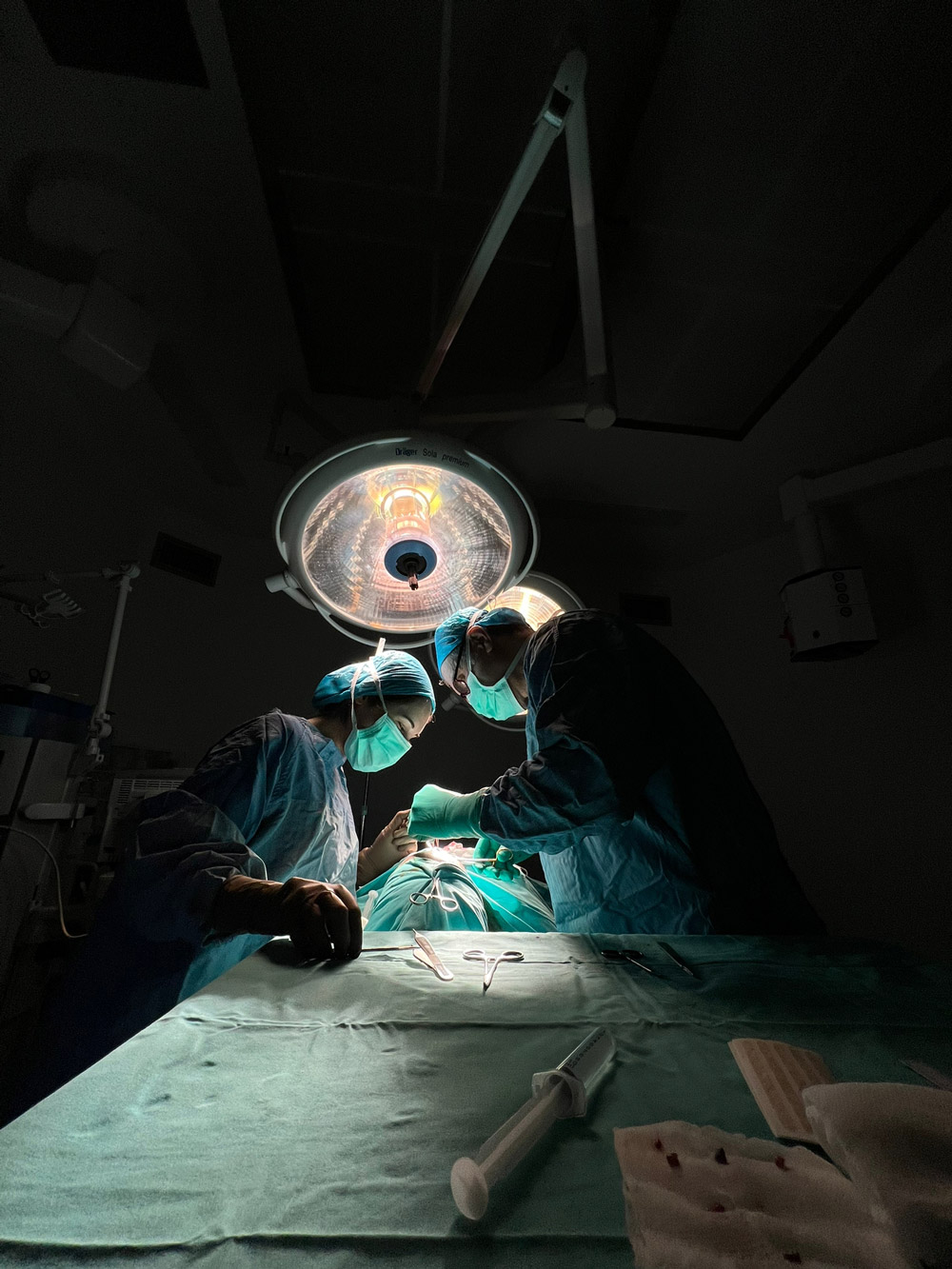




Migraine surgery: who may benefit and what does it involve?
Migraine is a neurological condition that can cause recurring headaches alongside nausea, sensitivity to light and sound, and visual or sensory symptoms. Attacks vary in frequency and severity. For some people, they have a substantial effect on everyday life, work, sleep and social activities.
Treatment starts with a neurological assessment and an appropriate plan for medication and preventive care. However, some people continue to have migraine attacks despite trying different treatment options, or cannot use certain treatments adequately because of side effects.
Migraine surgery is one approach that may be considered for selected patients with treatment-resistant symptoms and clinically identifiable peripheral trigger sites. It does not involve operating on the brain. Instead, it examines how certain sensory nerves in the head and neck interact with muscles, fascia, blood vessels, bone and other structures, with the aim of relieving possible pressure on these nerves in suitable patients.
Migraine surgery is not suitable for everyone with migraine. Before considering an operation, it is important to confirm the diagnosis, review previous treatments and identify the peripheral site or sites where the pain begins. Appropriate patient selection and accurate identification of trigger sites are also central themes in the surgical literature.
Understanding migraine
Migraine is more than a severe headache. Head pain may be accompanied by nausea, vomiting or sensitivity to light or sound. Some people also experience aura: visual, sensory or other neurological symptoms that occur before or during a headache.
The frequency, duration, intensity and starting point of attacks differ from person to person. These differences matter when considering surgery. A migraine diagnosis alone is not enough to establish suitability for peripheral trigger site surgery; the starting point of the pain, how it spreads and its possible relationship with peripheral nerves also need to be assessed.
Not every recurring headache is migraine. A neurological diagnosis should therefore be established before a surgical assessment, with other causes of headache excluded where necessary.
What is migraine surgery?
The terms migraine surgery, trigger site surgery, trigger site deactivation and peripheral nerve decompression are used in the medical literature to describe these approaches.
The rationale is that, in some people with migraine, contact with or compression of peripheral sensory nerves by nearby muscles, fascia, blood vessels or bone in the head and neck may contribute to the onset or worsening of pain.
The operation therefore does not aim to remove a single migraine “centre”. The surgeon assesses the course of a nerve at the individual patient’s peripheral trigger site or sites. Decompression may be performed if clinically relevant compression or contact is identified as a surgical target.
Several trigger sites and peripheral nerves have been described in the scientific literature. Surgical assessment commonly considers six main trigger regions.
Is migraine surgery brain surgery?
No. Migraine surgery does not involve operating on brain tissue.
The procedure targets peripheral sensory nerves in the head and neck and the anatomical structures around them. The term “migraine surgery” does not mean that the brain is opened or brain tissue is treated surgically.
The area considered for treatment depends on where the patient’s pain begins and which peripheral trigger sites are identified.
The six main migraine trigger sites
Accurately identifying the trigger site is one of the most important stages of assessment for migraine surgery.
It is important to establish not just where the pain is felt, but where it starts and how it spreads. Some patients have one dominant trigger site, while others have several active sites.
The six main trigger regions commonly assessed for surgery in the head and neck are:
- Frontal — the forehead
- Zygomaticotemporal — the temple
- Rhinogenic or septonasal — inside the nose
- Greater occipital — the central back of the neck
- Auriculotemporal — in front of the ear and around the temple
- Lesser occipital — the side of the back of the neck
1. Frontal trigger site: pain around the forehead
In patients with a frontal trigger site, pain may begin around the eyebrows, in the forehead or behind the eye.
The supraorbital and supratrochlear nerves are particularly relevant here. As they travel towards the forehead, they pass close to muscle, fascia and anatomical passageways in bone.
The course of these nerves can vary between patients, particularly where they pass through or near muscles involved in frowning, such as the corrugator supercilii. Two people with the same migraine diagnosis may therefore have different trigger site anatomy.
Assessment of a frontal trigger site considers where the pain begins, tenderness around the eyebrows and forehead, the pattern of pain spread and the patient’s clinical history.
For patients considered suitable for surgery, the aim is to reduce possible compression around the supraorbital and supratrochlear nerves and create more space for them.
2. Zygomaticotemporal trigger site: pain starting at the temple
When migraine pain begins at the temple, the peripheral nerves in the temporal region are assessed.
One important surgical structure in this region is the zygomaticotemporal nerve, which arises from the maxillary division of the trigeminal nerve. Its course through the muscles and fascia of the temporal region may form part of a peripheral trigger mechanism in some patients.
Pain may start at the temple and spread to surrounding areas. A patient’s description of the precise starting point helps identify the trigger site.
Not all migraine pain in the temporal region involves the same nerve. Distinguishing the zygomaticotemporal region from the auriculotemporal nerve in front of the ear is important for surgical planning. Recent studies of temporal migraine have also developed algorithms to help distinguish these two peripheral trigger sites clinically.
3. Rhinogenic or septonasal trigger site
In some patients, pain may begin behind the eye or in the middle of the face. Anatomical contact points inside the nose may also be assessed in these cases.
A deviated septum, the nasal turbinates or contact between other structures inside the nose may be examined as possible rhinogenic triggers in selected patients.
A deviated septum alone is not an indication for migraine surgery. Whether an anatomical variation inside the nose is related to migraine must be assessed alongside the patient’s pain pattern and other clinical findings.
For certain patients with retro-orbital pain, meaning pain that starts behind the eye, assessment may include looking for intranasal contact points and, if considered necessary, imaging the nose and paranasal region.
4. Greater occipital trigger site: pain starting at the back of the head
The greater occipital nerve is an important peripheral structure when migraine pain starts at the back of the head or the base of the skull.
This nerve travels through neck muscles and fascia to reach the scalp. Along its course, it may lie close to muscle, connective tissue or blood vessels.
Patients with an occipital trigger site may describe pain spreading from the base of the skull towards the back or top of the head, or further forwards.
It is also important to distinguish this pattern from conditions such as occipital neuralgia and cervicogenic headache. Pain at the back of the neck does not always indicate migraine with a peripheral trigger.
In suitable patients, surgical decompression may be planned to release potential areas of compression around the greater occipital nerve.
5. Auriculotemporal trigger site
The auriculotemporal nerve is another important peripheral nerve in the temporal region. It may be assessed particularly when pain is felt between the front of the ear and the temple.
This nerve may run close to the superficial temporal artery and its branches. In some patients, the proximity of the artery and nerve at the point of greatest pain may be clinically relevant.
Assessment may therefore involve asking the patient to point to where the pain begins and using a handheld Doppler to look for a blood vessel signal in that area. One study reported that a positive Doppler signal at the point of greatest pain closely corresponded to the presence of an artery at the same site during surgery.
The auriculotemporal region is a different anatomical target from the zygomaticotemporal trigger site. Distinguishing the two is important for surgical planning.
6. Lesser occipital trigger site
The lesser occipital nerve may be assessed when pain starts further towards the side of the back of the neck.
This nerve follows a more lateral course than the greater occipital nerve. It may be particularly relevant when pain spreads from the side of the neck towards the area behind the ear or the back and side of the head.
In some patients, the lesser occipital trigger site may be active on its own; in others, it may be active alongside the greater occipital or other trigger sites.
Modern anatomical studies also note that, in addition to the greater and lesser occipital nerves, the third occipital nerve may be surgically relevant in some patients.
How is suitability for migraine surgery assessed?
Selecting the right patient is as important as the surgical technique itself.
During Dr. Ali Bal’s assessment, different diagnostic methods may be combined according to the patient’s clinical presentation. The aim is not to use a single test to decide whether someone should have surgery, but to bring together different findings to understand their peripheral trigger pattern.
Confirming the neurological diagnosis
The patient’s migraine diagnosis must first be confirmed through neurological assessment.
Other headache disorders can cause similar symptoms. The severity of a headache alone is therefore not enough to establish suitability for surgical assessment.
Migraine history and pain mapping
The assessment explores the following features of the patient’s pain in detail:
- where it starts and how it spreads;
- how long it lasts and how often it occurs;
- what triggers it;
- which areas are tender.
Pointing directly to where the pain begins, or drawing the pattern on a diagram of the head, may help clarify the trigger site. Studies suggest that pain drawings can be useful in patient selection.
Physical examination
The starting points of pain and areas of tenderness are assessed in the frontal, temporal, auriculotemporal and occipital regions.
A pain pattern that corresponds to the anatomical course of a peripheral nerve is one of the findings used to identify a trigger site.
Handheld Doppler assessment
A handheld Doppler may be used, particularly in regions where a relationship between a nerve and a blood vessel is suspected.
Doppler assessment can help identify whether an artery is present and where it lies in an area of pain onset or tenderness. It is used particularly to investigate the relationship between the auriculotemporal nerve and the superficial temporal artery.
Local anaesthetic nerve blocks
Local anaesthetic may be administered around a suspected peripheral nerve to assess its temporary effect on pain.
A marked reduction in pain after a nerve block during a migraine attack may help identify that region as a possible trigger site.
Clinical studies suggest that peripheral nerve blocks can help identify surgical targets. However, the response must be interpreted alongside other clinical findings.
Botox assessment
Botulinum toxin may be used if the patient is not experiencing active pain during the consultation, or when the role of particular trigger sites needs to be assessed.
A reduction in attack frequency or severity in a particular region after Botox may provide additional information for surgical assessment. Some studies have reported a possible association between a positive response to Botox and the response to surgery.
Important: a positive response to Botox does not, on its own, prove nerve compression or guarantee a successful surgical outcome.
Keeping a migraine diary
A migraine diary helps patients track monthly headache days, attack duration, pain intensity, medication use and possible triggers more objectively.
A diary kept before surgery also makes it easier to assess changes afterwards. Detailed headache diaries were used in early research into migraine surgery as well.
Who may be considered for migraine surgery?
Migraine surgery is not suitable for every person with migraine. An assessment may be considered particularly for selected patients with the following features:
- a migraine diagnosis confirmed by a neurologist;
- appropriate medication and preventive treatments have been considered;
- attacks continue to affect quality of life despite treatment;
- some treatments cannot be adequately tolerated because of side effects;
- the pain pattern may be clinically consistent with specific peripheral trigger sites.
The surgical literature also highlights careful patient selection and, where needed, collaboration with neurologists or headache specialists.
When might migraine surgery be unsuitable?
The key question in a surgical assessment is not simply whether the patient has migraine.
It is whether there is sufficient clinical evidence of a peripheral trigger site contributing to this patient’s pain that could be targeted surgically.
Surgery may be unsuitable when the migraine diagnosis is uncertain, another headache disorder is suspected, or clinical findings do not support a peripheral trigger site.
General health, current medication, previous operations and individual risks associated with anaesthesia or surgery are also assessed.
How is migraine surgery performed?
Migraine surgery is not a single, standard operation performed in the same way for every patient.
The surgical plan is tailored to the trigger site or sites identified as active.
For one patient, treating the frontal region alone may be sufficient. Another may need assessment of several regions together, such as frontal and occipital, or temporal and auriculotemporal sites.
Current approaches include both endoscopic and open peripheral nerve surgery.
Surgery for frontal trigger sites
The aim is to release possible areas of compression around the supraorbital and supratrochlear nerves.
An endoscopic approach may be suitable for some patients. Depending on the anatomy and surgical plan, an alternative approach through the upper eyelid crease may be preferred in certain cases.
The objective is to relieve potential pressure on the peripheral nerves from surrounding muscle, fascia or bone.
Surgery for zygomaticotemporal trigger sites
An endoscopic approach may be used to treat the zygomaticotemporal region in suitable cases.
The peripheral nerve anatomy in the temporal region is assessed, and the procedure is planned according to the relationship between the target nerve and surrounding tissues.
Surgery for auriculotemporal trigger sites
The relationship between the auriculotemporal nerve, superficial temporal artery and surrounding tissues is important in this region.
For a direct surgical approach, the point where pain begins and blood vessels identified with Doppler may help guide planning. The literature also describes direct surgical techniques for this region performed under local anaesthesia.
Surgery for greater occipital trigger sites
Surgery involving the greater occipital nerve follows its anatomical course at the back of the neck.
If compression points involving muscle, fascia, connective tissue or blood vessels are identified, release of the nerve may be planned.
Where possible, the incision is placed in an appropriate hair-bearing area of the scalp.
Surgery for lesser occipital trigger sites
Decompression of the lesser occipital nerve involves assessing the nerve’s anatomy further towards the side of the back of the neck.
The approach and incision site depend on the patient’s trigger region and individual anatomy.
Surgery for rhinogenic trigger sites
Surgery for trigger sites within the nose may be performed through an intranasal approach.
Treatment of contact points involving structures such as the septum and turbinates may be planned in selected cases where they are thought to be related to the patient’s migraine pattern.
The essential point is that not every anatomical variation inside the nose should be considered a cause of migraine.
Anaesthesia for migraine surgery
The type of anaesthesia depends on the trigger sites being treated and the extent of the operation.
Depending on the planned procedure, options may include local anaesthesia, local anaesthesia with sedation, or general anaesthesia.
A limited operation at one peripheral site may have different anaesthetic requirements from surgery treating several trigger sites in one session. Surgical series describing peripheral nerve decompression under local anaesthesia have also been published.
Dr. Ali Bal determines the anaesthetic approach individually, taking the surgical plan and the patient’s general health into account.
Preparing for surgery
Before surgery, tell your doctor about all prescription medicines, treatments that may have a blood-thinning effect, vitamins, herbal remedies and other supplements you use.
Only stop a medicine or change its dose on the advice of the relevant doctor.
Smoking, known medical conditions, allergies and previous operations also form part of surgical planning.
You will receive separate instructions about any necessary tests, fasting and preparation for the day of surgery, according to the planned anaesthesia.
How long does migraine surgery take?
There is no single operating time that applies to every patient. Duration may depend on the number and location of active trigger sites, whether an endoscopic or open technique is used, and the extent of the procedures planned for the same session.
A more accurate estimate can be given once the trigger sites have been identified and the surgical plan is complete.
Recovery after migraine surgery
Recovery varies with the extent of surgery, the trigger regions treated and the individual’s tissue healing characteristics.
Early symptoms in the treated areas may include swelling, tenderness, tightness, bruising, temporary numbness or tingling.
Patients return to daily activities gradually and in a controlled way.
Healing of the surgical tissues and assessment of the longer-term effect on migraine are separate processes.
Swelling and tenderness may settle over several weeks, while assessing changes in migraine frequency and severity may require longer follow-up.
When can the results be assessed?
The outcome of migraine surgery cannot be judged solely in the first few days after the operation.
Follow-up may assess several measures, including monthly migraine days, attack frequency, pain intensity, attack duration, medication use and the effect on daily life.
Many surgical studies assess outcomes over longer follow-up periods, such as six and twelve months.
Continuing the migraine diary kept before surgery may therefore make comparison easier.
Can there be more than one migraine trigger site?
Yes. Some patients have one dominant peripheral region, while others have several trigger sites at the same time.
After the dominant trigger site is treated, a secondary site that was previously less apparent may also become more noticeable.
A study of 185 patients reported that previously unrecognised secondary trigger sites became apparent after surgery in some patients.
This is one reason why migraine surgery is not performed as the same standard operation at a single anatomical point for every patient.
Risks and possible complications
Like any operation, migraine surgery carries potential risks. Depending on the region treated and the technique used, the following complications have been reported in the literature:
- numbness, tingling or temporary changes in sensation;
- tenderness or itching;
- temporary hair loss on the scalp;
- haematoma, asymmetry or wound-healing problems;
- infection;
- rarely, nerve-related pain or neuroma.
Migraine attacks may also persist, improve less than expected, or another trigger site may become more apparent after surgery.
Each patient’s risk profile should be assessed according to the extent of surgery and their individual anatomy.
What is the success rate of migraine surgery?
It would not be accurate to give one definitive success percentage that applies to every patient.
Studies differ in their patient selection criteria, surgical techniques, treated trigger sites, definitions of success and length of follow-up.
For example, some studies define success as a reduction of at least 50% in migraine intensity or frequency, while others report complete elimination of migraine as a separate outcome. Directly comparing percentages from different studies can therefore be misleading.
A systematic review and meta-analysis involving 627 patients reported complete elimination of migraine headache in 38% of selected surgical patients at six to twelve months of follow-up. The researchers also specifically highlighted the need for stronger, longer-term studies.
During an assessment with Dr. Ali Bal, individual expectations, potential benefits and limitations are therefore discussed separately.
How does migraine surgery differ from Botox?
Botulinum toxin treatment and migraine surgery are different treatments.
Botulinum toxin is a medical treatment used for chronic migraine in appropriate patients, with effects that last for a limited period.
Migraine surgery, by contrast, involves assessing anatomical peripheral trigger sites in selected patients and surgically reducing potential compression of nerves considered suitable for treatment.
Botox may also form part of preoperative trigger site assessment for some patients. A positive response can provide useful information, but does not mean surgery will produce a certain result.
Does surgery replace migraine medication?
Migraine surgery is not a replacement for medical treatment for everyone diagnosed with migraine.
The foundation of migraine management remains treatment planned after neurological assessment. Surgery is more often considered for patients whose symptoms persist despite appropriate treatments being considered and who are found suitable in relation to specific peripheral trigger sites.
Any decision to reduce, change or stop migraine medication after surgery should be made with the relevant doctor.
Will migraine surgery leave scars?
Incision placement depends on the target region and the surgical technique.
For some endoscopic approaches, incisions may be placed within the hair-bearing scalp. Open surgery may also use hair-bearing areas or natural anatomical creases where possible.
However, no surgical procedure can be guaranteed to leave no scar.
Scar visibility may be influenced by skin characteristics, genetics, incision location, surgical technique, wound healing and postoperative care.
Assessment with Dr. Ali Bal
Dr. Ali Bal, a specialist in Plastic, Reconstructive and Aesthetic Surgery, considers the neurological diagnosis, migraine history and peripheral trigger sites together when assessing patients for migraine surgery.
Rather than offering the same operation to every patient, surgical planning is personalised according to where the pain starts, how it spreads and the individual’s anatomy.
Depending on the patient, assessment may draw on:
- a detailed migraine history;
- examination of trigger points;
- pain mapping;
- handheld Doppler;
- local anaesthetic nerve blocks;
- Botox assessment of trigger sites;
- a migraine diary.
The six main peripheral trigger regions are assessed: frontal, zygomaticotemporal, rhinogenic, greater occipital, auriculotemporal and lesser occipital.
If surgery is considered appropriate, an endoscopic or open approach is planned according to the target region or regions.
After surgery, migraine frequency, severity and the patient’s clinical progress are monitored so that the outcome can be assessed over time.
Frequently asked questions about migraine surgery
Can anyone with migraine have surgery?
No. Surgery may be considered for selected patients with a confirmed neurological diagnosis of migraine, whose appropriate medical treatments have been reviewed and who are suitable for assessment of peripheral trigger sites.
Does the operation involve the brain?
No. The procedure does not take place inside the brain. It targets peripheral sensory nerves in the head and neck and their relationship with surrounding anatomical structures.
Can surgery completely stop migraine attacks?
A substantial reduction or complete elimination of attacks has been reported in some patients, but this cannot be guaranteed for everyone. Patient selection, trigger sites and individual anatomy may affect the outcome.
How many trigger sites are assessed?
Six main regions are considered: frontal, zygomaticotemporal, rhinogenic, greater occipital, auriculotemporal and lesser occipital. More than one may be active in the same patient.
How is a trigger site identified?
Alongside the clinical history and physical examination, assessment may use pain mapping, handheld Doppler, local nerve blocks, Botox and a migraine diary, depending on the individual patient.
Does a good response to Botox mean I am suitable for surgery?
A positive response to Botox may help the assessment, but is not enough on its own to decide on surgery. It is considered alongside other clinical findings.
Why is a nerve block used?
A local anaesthetic nerve block may help assess the role of a suspected peripheral trigger site in the patient’s pain. A positive response can provide additional clinical information when identifying a surgical target.
Why is Doppler used in migraine surgery assessment?
At some trigger sites, a peripheral nerve may lie close to nearby blood vessels. Handheld Doppler can help locate a vessel where the pain begins, particularly in the auriculotemporal region.
Is migraine surgery performed endoscopically?
Different regions require different approaches. Endoscopic techniques may be used for frontal and some temporal trigger sites, while open peripheral surgery may be preferred for occipital or auriculotemporal sites. Rhinogenic sites may be treated through the nose. The approach is selected according to the patient and the region involved.
Is general anaesthesia always needed?
No. Depending on the extent of the procedure, local anaesthesia, sedation or general anaesthesia may be used. The appropriate approach is determined during surgical planning.
Can several trigger sites be treated in one operation?
In suitable patients, several active trigger sites may be considered within the same surgical plan. Whether this is needed depends on the individual’s pain pattern and anatomical findings.
Can a different trigger site become apparent after surgery?
In some patients, treating the dominant trigger site may reveal another site that was not previously apparent. This is described in the literature as a secondary trigger site.
When will I know the outcome of surgery?
Although surgical healing may progress over a few weeks, assessing changes in migraine frequency and severity requires longer follow-up. Studies commonly assess outcomes at six and twelve months.